Overview
SimLEARN (Simulation Learning, Education, and Research Network) is a program established by the U.S. Department of Veterans Affairs (VA) to provide advanced simulation training for healthcare professionals. SimLEARN's goal is to enhance the training experience for medical professionals using state-of-the-art simulation techniques to improve patient care, reduce medical errors, and foster continuous learning in the healthcare field. In 2023, SimLEARN embarked on a redesign of their website to modernize its user experience (UX) and interface (UI), making it more accessible, intuitive, and informative for healthcare providers, researchers, and students alike.
Challenges
 User Experience (UX)
The original website had an outdated interface that was hard to navigate, especially for first-time users.
Information was scattered across multiple pages, leading to difficulty in locating specific resources or updates.
The website lacked a streamlined, user-friendly design, which hampered its ability to serve as an efficient educational resource.
Branding and Visual Design
The original design did not reflect the cutting-edge nature of SimLEARN's training programs.
The color scheme, fonts, and images used were not visually appealing or aligned with the modern healthcare industry.
The site did not effectively communicate SimLEARN's mission of innovation in simulation training.
Mobile and Accessibility
The website was not optimized for mobile devices, limiting its usability for users accessing it on phones or tablets.
The site lacked accessibility features, making it difficult for users with disabilities to navigate.
Content Structure
The content was not organized in a way that allowed easy access to key areas such as training programs, news, and resources.
New users, including trainees and educators, found it difficult to quickly understand the available services or get started with SimLEARN's offerings.
User Experience (UX)
The original website had an outdated interface that was hard to navigate, especially for first-time users.
Information was scattered across multiple pages, leading to difficulty in locating specific resources or updates.
The website lacked a streamlined, user-friendly design, which hampered its ability to serve as an efficient educational resource.
Branding and Visual Design
The original design did not reflect the cutting-edge nature of SimLEARN's training programs.
The color scheme, fonts, and images used were not visually appealing or aligned with the modern healthcare industry.
The site did not effectively communicate SimLEARN's mission of innovation in simulation training.
Mobile and Accessibility
The website was not optimized for mobile devices, limiting its usability for users accessing it on phones or tablets.
The site lacked accessibility features, making it difficult for users with disabilities to navigate.
Content Structure
The content was not organized in a way that allowed easy access to key areas such as training programs, news, and resources.
New users, including trainees and educators, found it difficult to quickly understand the available services or get started with SimLEARN's offerings.
Goals of the Redesign
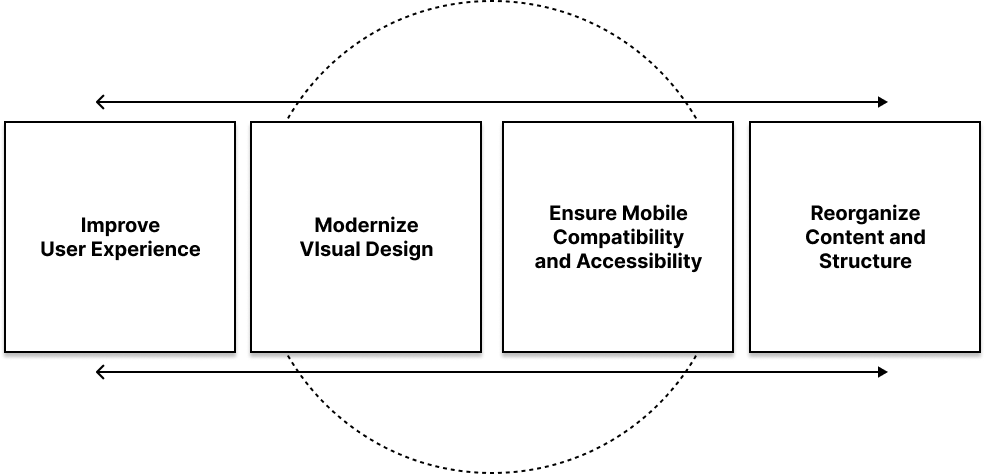 Improved User Experience
Simplify navigation and content structure to ensure that users can quickly find the information they need.
Provide clear calls to action, such as registration for programs, links to research articles, and other essential resources.
Modernize Visual Design
Create a visually appealing, modern design that reflects SimLEARN's commitment to advancing healthcare training.
Use imagery and color schemes that convey innovation, professionalism, and the mission to improve healthcare through simulation.
Ensure Mobile Compatibility and Accessibility
Optimize the website for mobile devices, ensuring that it functions seamlessly across various screen sizes.
Implement accessibility features to support users with disabilities, including improved text contrast, keyboard navigation, and screen reader compatibility.
Reorganize Content and Structure
Develop an intuitive content strategy that prioritizes key areas such as program information, research, and news updates.
Incorporate easy-to-read layouts, interactive features, and clear pathways for different user groups (trainers, students, researchers, etc.).
Improved User Experience
Simplify navigation and content structure to ensure that users can quickly find the information they need.
Provide clear calls to action, such as registration for programs, links to research articles, and other essential resources.
Modernize Visual Design
Create a visually appealing, modern design that reflects SimLEARN's commitment to advancing healthcare training.
Use imagery and color schemes that convey innovation, professionalism, and the mission to improve healthcare through simulation.
Ensure Mobile Compatibility and Accessibility
Optimize the website for mobile devices, ensuring that it functions seamlessly across various screen sizes.
Implement accessibility features to support users with disabilities, including improved text contrast, keyboard navigation, and screen reader compatibility.
Reorganize Content and Structure
Develop an intuitive content strategy that prioritizes key areas such as program information, research, and news updates.
Incorporate easy-to-read layouts, interactive features, and clear pathways for different user groups (trainers, students, researchers, etc.).
Process
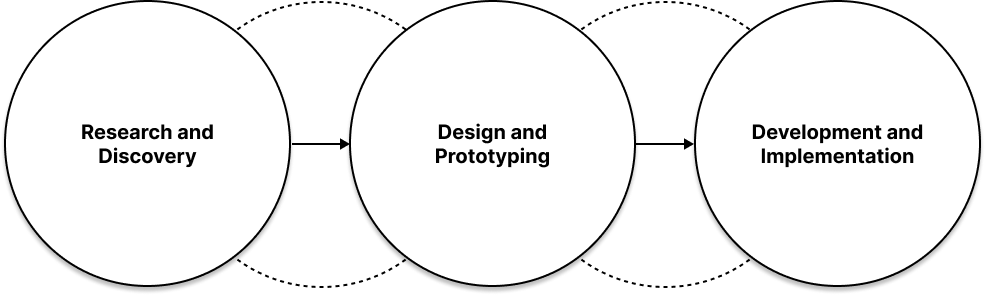 Research and Discovery
The team held discussions with SimLEARN staff, program participants, and healthcare professionals to understand their needs and pain points when using the website.
Analyzing other healthcare simulation websites helped identify best practices and areas where SimLEARN could differentiate itself.
Conducted usability testing with current and potential users to gather feedback on their experiences with the old website and desired features.
Design and Prototyping
Initial wireframes were created to map out the key elements of the website, focusing on clear navigation, intuitive content organization, and accessible design.
The design team created high-fidelity mockups incorporating modern typography, bold colors, and visuals related to healthcare and simulation training.
Developed interactive prototypes for user testing, allowing the SimLEARN team and a select group of users to provide feedback on the usability and design of the site.
Development and Implementation
The website was built using responsive web design techniques to ensure it performed well on both desktop and mobile devices.
Implemented WCAG (Web Content Accessibility Guidelines) standards to ensure the site was usable for individuals with disabilities.
Research and Discovery
The team held discussions with SimLEARN staff, program participants, and healthcare professionals to understand their needs and pain points when using the website.
Analyzing other healthcare simulation websites helped identify best practices and areas where SimLEARN could differentiate itself.
Conducted usability testing with current and potential users to gather feedback on their experiences with the old website and desired features.
Design and Prototyping
Initial wireframes were created to map out the key elements of the website, focusing on clear navigation, intuitive content organization, and accessible design.
The design team created high-fidelity mockups incorporating modern typography, bold colors, and visuals related to healthcare and simulation training.
Developed interactive prototypes for user testing, allowing the SimLEARN team and a select group of users to provide feedback on the usability and design of the site.
Development and Implementation
The website was built using responsive web design techniques to ensure it performed well on both desktop and mobile devices.
Implemented WCAG (Web Content Accessibility Guidelines) standards to ensure the site was usable for individuals with disabilities.
Results
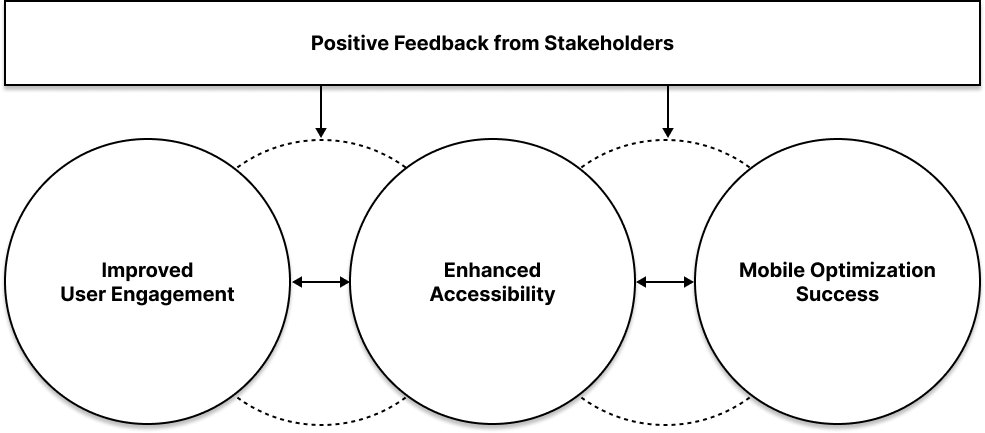 Improved User Engagement
Post-launch analytics showed a significant increase in the time spent on the website and a reduction in bounce rates, indicating that users found the site easier to navigate and more engaging.
Enhanced Accessibility
Users with disabilities reported a much smoother experience, with improved accessibility features such as high-contrast mode, keyboard navigability, and compatibility with screen readers.
Positive Feedback from Stakeholders
SimLEARN staff expressed satisfaction with the new content management system, which made it easier to update the website without relying on developers.
Healthcare professionals and students reported that the website was more intuitive and easier to use when registering for courses or accessing resources.
Mobile Optimization Success
Mobile traffic increased by 40% within the first few months after launch, confirming that the mobile-friendly design significantly improved the user experience for users on smartphones and tablets.
Improved User Engagement
Post-launch analytics showed a significant increase in the time spent on the website and a reduction in bounce rates, indicating that users found the site easier to navigate and more engaging.
Enhanced Accessibility
Users with disabilities reported a much smoother experience, with improved accessibility features such as high-contrast mode, keyboard navigability, and compatibility with screen readers.
Positive Feedback from Stakeholders
SimLEARN staff expressed satisfaction with the new content management system, which made it easier to update the website without relying on developers.
Healthcare professionals and students reported that the website was more intuitive and easier to use when registering for courses or accessing resources.
Mobile Optimization Success
Mobile traffic increased by 40% within the first few months after launch, confirming that the mobile-friendly design significantly improved the user experience for users on smartphones and tablets.
Key Takeaways
Focus on User Needs: Conducting thorough research through stakeholder interviews and user testing helped ensure that the website redesign met the needs of all target audiences.
Visual Design Matters: A modern, clean, and cohesive visual design can help communicate an organization's values and mission more effectively.
Mobile and Accessibility Optimization: Optimizing for mobile devices and ensuring accessibility should be top priorities in any website redesign project, especially for organizations with diverse user groups.
Iterative Testing: Ongoing testing and feedback throughout the design process can ensure that the final product truly meets user expectations.
Conclusion
The SimLEARN website redesign successfully addressed the challenges of outdated design, poor user navigation, and accessibility issues. By focusing on modernizing the user experience, improving content organization, and ensuring mobile and accessibility compatibility, the redesign has positioned SimLEARN as a leader in healthcare simulation training, making its resources and programs more accessible to users across various platforms. The project highlights the importance of user-centered design, iterative feedback, and collaboration across stakeholders to create a functional and impactful digital presence.