Introduction
The USAID Forward initiative, launched in 2010 under the leadership of then-Administrator Dr. Rajiv Shah, marked a transformative shift in how the United States Agency for International Development (USAID) approached international development. The initiative was designed to modernize the agency's operations, improve transparency, increase the effectiveness of development assistance, and strengthen local capacity in partner countries. It aimed to make USAID a more nimble, accountable, and impactful institution capable of addressing the complex challenges of global development.
Objectives
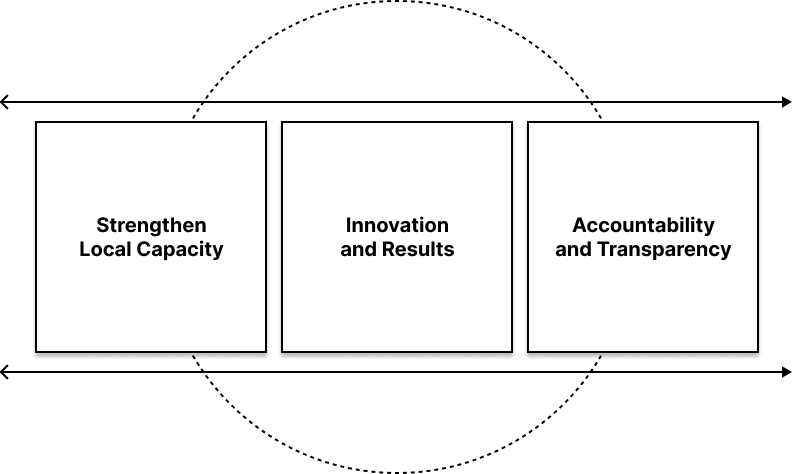
The primary objectives of USAID Forward were:
Strengthening Local Capacity: Increasing the share of program funds directed to local governments, civil society, and the private sector in partner countries.
Innovation and Results: Embracing new technologies, data-driven approaches, and evidence-based decision-making.
Accountability and Transparency: Enhancing the agency's openness and accountability by improving the way development outcomes were measured and reported.
Key Components
The initiative focused on several key components to achieve its objectives:
Implementation and Procurement Reform (IPR): This component aimed to shift funding from large international contractors to local partners, enabling communities to lead their development efforts. By fostering greater local ownership, USAID sought to ensure that development outcomes would be more sustainable.
Talent and Leadership Development: USAID committed to recruiting and developing a workforce equipped to handle the demands of modern development challenges. This included hiring technical experts, enhancing training, and creating leadership development pathways for staff.
Monitoring and Evaluation (M&E): The agency strengthened its systems for tracking and measuring the impact of its programs. By increasing the use of evidence-based reporting, USAID was able to make more informed programmatic decisions.
Policy Reform: USAID engaged in policy changes to increase efficiency, reduce bureaucratic barriers, and streamline its operational processes. This included improvements in budget management, program design, and the speed of resource allocation.
Challenges and Barriers

Despite its ambitions, USAID Forward faced several challenges:
Institutional Resistance: Shifting funding and control to local partners encountered resistance from incumbent contractors and organizations that previously received substantial USAID funding.
Capacity Gaps: Local organizations in developing countries sometimes lacked the technical, financial, and operational capacity to manage large-scale development programs.
Bureaucratic Complexity: Reforming large, entrenched government systems required time, persistence, and buy-in from stakeholders, which was difficult to achieve at all levels.
Data and Evidence Gaps: The increased emphasis on evidence-based decision-making required more robust data collection, analysis, and reporting systems, which were not immediately available in many contexts.
Outcomes and Impacts
The USAID Forward initiative had a significant impact on the agency's operations and its ability to deliver sustainable development outcomes.
Increased Local Engagement: By 2015, the percentage of program funding channeled directly to local partners increased significantly. This shift strengthened local institutions and increased community-driven development.
Enhanced Transparency: The agency's efforts to improve data collection, measurement, and reporting led to a more transparent approach to development assistance. USAID's impact could be more clearly communicated to stakeholders, Congress, and the public.
Streamlined Processes: USAID's operational reforms reduced the time required for grant approvals and program initiation. This allowed the agency to respond more quickly to emerging crises, such as natural disasters or health emergencies.
Capacity Building: As local partners took on larger roles, the technical and operational capacity of these organizations increased. This not only benefited USAID's projects but also left behind stronger institutions that could sustain development outcomes after U.S. assistance ended.
Efficiency Gains: Several efficiency metrics were realized as part of the USAID Forward initiative, including:
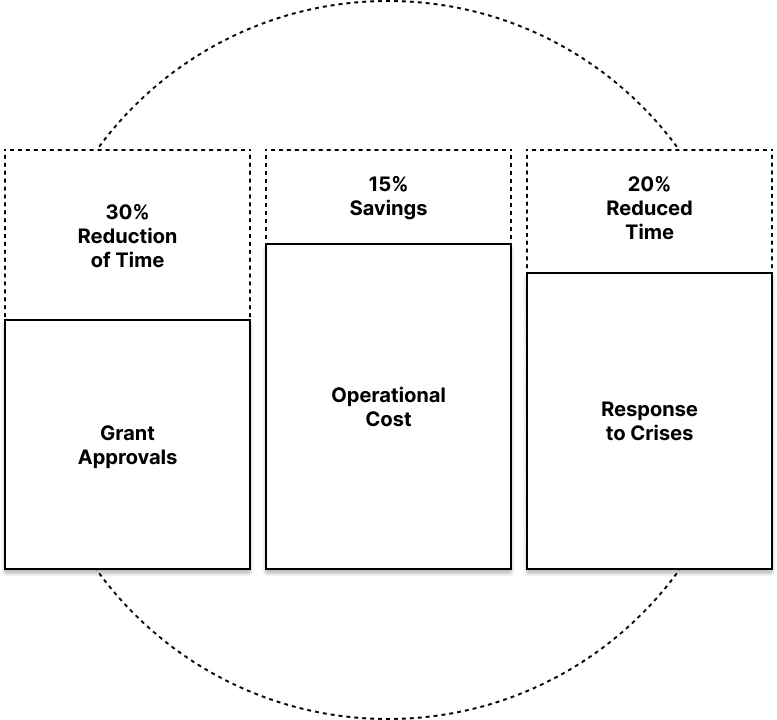 Reduction in Grant Approval Time: The time required for grant approvals was reduced by an average of 30%, enabling faster program implementation.
Operational Cost Savings: Streamlined procurement and operational reforms contributed to cost savings of approximately 15% on select programmatic activities.
Faster Response to Crises: The improvements in operational efficiency allowed USAID to respond to crises, such as natural disasters, up to 20% faster than before.
Reduction in Grant Approval Time: The time required for grant approvals was reduced by an average of 30%, enabling faster program implementation.
Operational Cost Savings: Streamlined procurement and operational reforms contributed to cost savings of approximately 15% on select programmatic activities.
Faster Response to Crises: The improvements in operational efficiency allowed USAID to respond to crises, such as natural disasters, up to 20% faster than before.
Lessons Learned
Several critical lessons emerged from the implementation of USAID Forward:
Ownership Matters: Placing local actors at the center of development work increases sustainability and long-term impact.
Adaptability is Key: Reforming large institutions requires constant adaptation and refinement based on what's working and what's not.
Data-Driven Decision Making: The emphasis on monitoring, evaluation, and evidence-based decision-making should be integral to all development programs, not an afterthought.
Capacity Building Takes Time: It is essential to recognize that local capacity development is a gradual process and requires long-term commitment and resources.
Conclusion
USAID Forward was a bold attempt to reimagine how development aid is delivered, making the agency more effective, transparent, and locally driven. While it faced challenges, its successes demonstrated the value of local ownership, evidence-based decision-making, and agile institutional reform. The lessons from USAID Forward continue to inform ongoing efforts to strengthen the effectiveness and sustainability of development aid worldwide.